A normative RAG for engineers
A way to ask what a rule says and get the actual paragraph back, instead of an answer you cannot check.
Engineering projects are governed by standards: long documents, written to be legally precise rather than easy to read, and there are more of them than anyone can keep in their head. The everyday cost is not a wrong answer. It is an engineer losing an afternoon working out which of four documents applies, or quietly deciding not to ask.
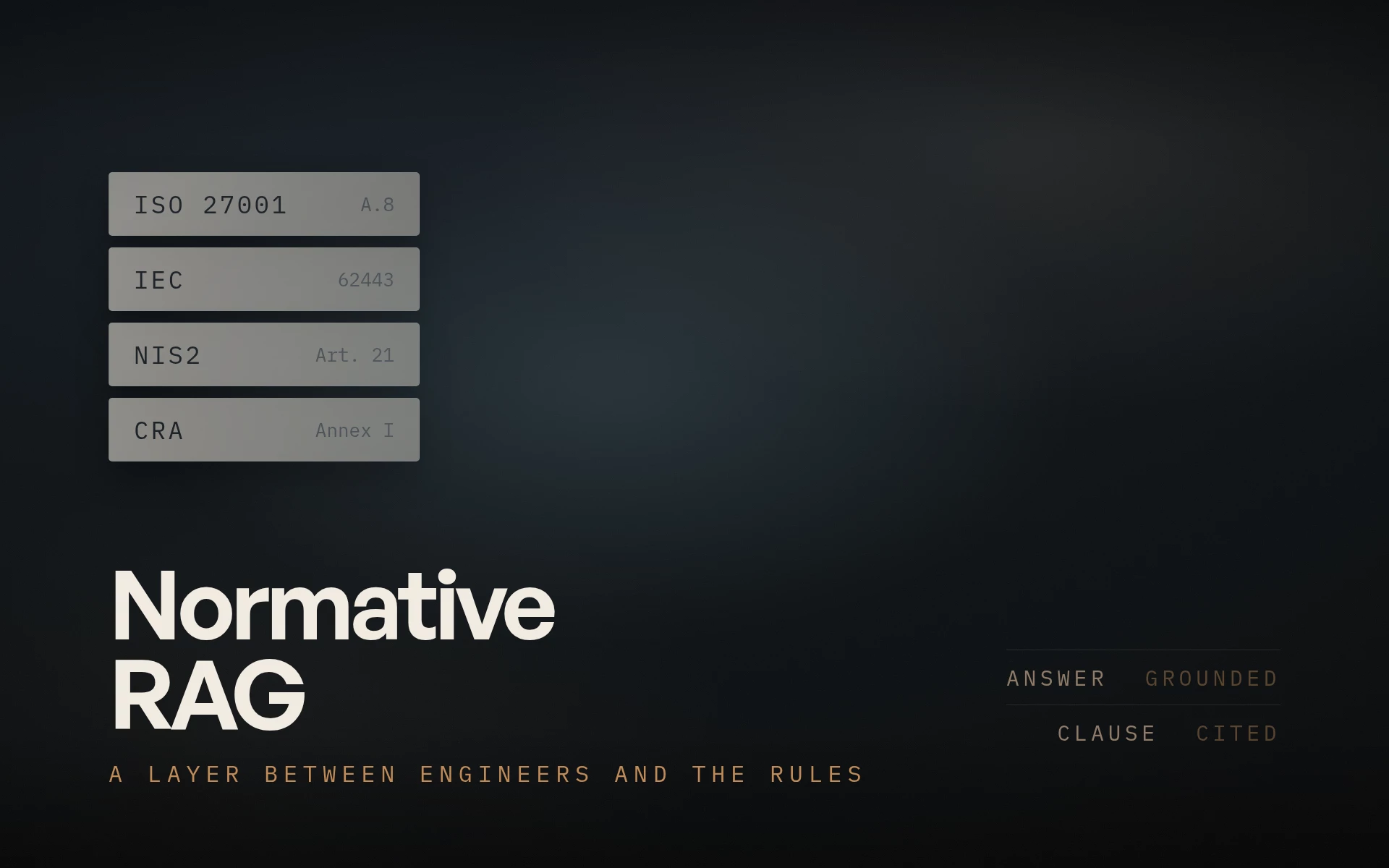
So I built something to ask. You put the question in ordinary language and it comes back with the passage from the real document, and a way to open it.
Why not just ask a chatbot
Because a general assistant answers from memory, in a confident voice, and you have no way to tell a remembered rule from an invented one. For a standard that combination is genuinely dangerous: the answer is specific, it sounds authoritative, and checking it means going back to the document you were trying to avoid reading in the first place.
This is built the other way round. It is not allowed to answer from memory at all. It searches the actual documents, and what it puts in front of you is the text that is in them.
It answers with the clause, or it says it does not know
Every answer ends in a passage you can open and read yourself. The system's job is to find the right paragraph and show it, not to summarise it away.
And when it cannot find one, it says so. That sounds like a limitation and it is the most important behaviour in the whole thing: an answer with no source is worse than no answer, because it is specific enough to act on and impossible to check.
A person still decides
This gets an engineer to the right paragraph in seconds instead of an afternoon. It does not tell anyone whether they comply. That judgement stays with the person accountable for it, because reading a rule against a real situation is the part that carries responsibility, and responsibility is not something you can hand to a model.
The line is deliberate. A tool that helps you find the rule is useful. One that tells you that you are compliant is giving an opinion, and it is not qualified to give one.
What I will not publish
Which standards are indexed, how the collection was assembled, or anything about the project it supports. Described at a high level under NDA.
Work carried out under NDA. This page describes the engineering, not the employer. No employer names, internal architectures, client details or proprietary systems appear anywhere on this site, and none will be added.